Most of us have money habits, whether we realise it or not. Maybe you buy lunch on the way to work, check your bank balance just before payday or promise you’ll save whatever is left at the end of each month.
Some habits can make managing money easier, while others might not work so well. But deciding to change financial habits and actually doing so are two different things.
Routines and emotions can influence how you manage money, which is why changing your behaviour isn’t always as simple as having more financial discipline.
What are money habits?
Money habits are the things you regularly do when you spend, save, borrow or manage your money. They could include:
- Saving money as soon as you’re paid
- Checking your bank balance regularly
- Making unplanned purchases
- Automatically renewing subscriptions
- Using credit for certain expenses
- Putting off checking bills or your account balance
Not every habit is automatically good or bad. What matters is how it affects you and whether it works for your financial circumstances.
What causes poor financial habits?
A habit can become automatic when we repeat it often enough. If you always buy a takeaway coffee at work, for example, you might find yourself following the same routine without actively deciding to spend money each time.
Convenience can play a part, too. Contactless payments and saved card details make buying things easier, while subscriptions can continue without you having to make a decision every month.
Then there are emotions. Stress, boredom, celebrations or simply wanting a treat can influence what we buy.
And importantly, our circumstances matter. Housing costs, income, family responsibilities, health and unexpected expenses can affect our financial choices.
Why do people struggle with financial discipline?
It’s easy to assume that changing how you spend is all about willpower when financial discipline is just one part of the picture.
If most of your income already goes towards your rent or mortgage, groceries, energy and travel, there might not be much flexibility in your budget to begin with.
Rather than blaming yourself for a lack of discipline, it can be more useful to understand what is influencing a particular habit. Try looking back over a month or two of transactions and asking yourself:
- What do I regularly spend money on?
- Which payments happen automatically?
- When am I most likely to make an unplanned purchase?
- Do I tend to spend more at certain times of the month?
- What do I do with my money immediately after payday?
How to overcome bad financial habits
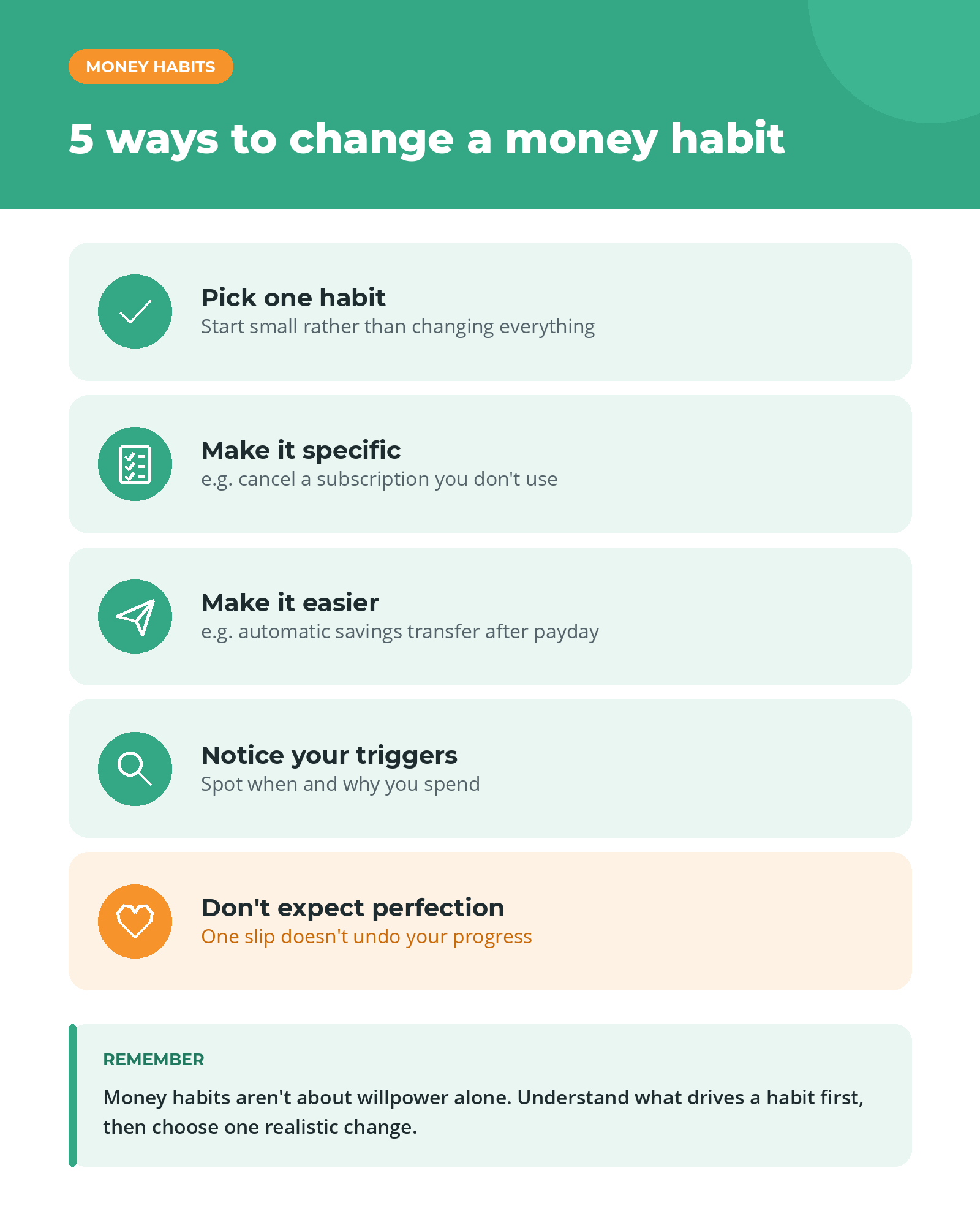
If you want to break bad spending habits, you don’t need to change everything at once. Starting with one small change can make it easier to stick with.
What if an unexpected expense comes along?
Changing how you manage your money can help you feel more in control, but it can’t deal with every financial challenge. Even if you’ve been keeping a close eye on your spending, you might need to pay for an unexpected car repair or household expense.
If you don’t have enough set aside to cover a one-off cost, you may need to explore other options. That could include asking whether you can spread the cost, using available savings, or, if it’s affordable, considering borrowing.
QuidMarket offers quick loans for unexpected expenses, subject to eligibility and affordability checks. As a new customer, you can borrow between £300 and £1,000, with flexible repayment terms over 3 to 6 months.
If you’re considering taking out a loan, make sure you understand the total cost and repayments before applying.
The bottom line
So, why are financial habits hard to change? Because our financial decisions aren’t driven by willpower alone.
If there’s something you’d like to change, try to understand your behaviour first, then choose one realistic change to work on. And if the unexpected happens, it’s worth exploring your options. Speak to a member of the QuidMarket team or apply online today.