If you’ve noticed your weekly shop costing more or your household budget feeling tighter, inflation could be part of the reason.
The impact of inflation on daily life can show up in everything from groceries and travel to bills and savings. Understanding what’s happening won’t make prices fall, but it can help you make more informed decisions about your money.
What is inflation and how does it affect your money?
Inflation describes how prices increase over time. The inflation rate measures how quickly prices are rising overall.
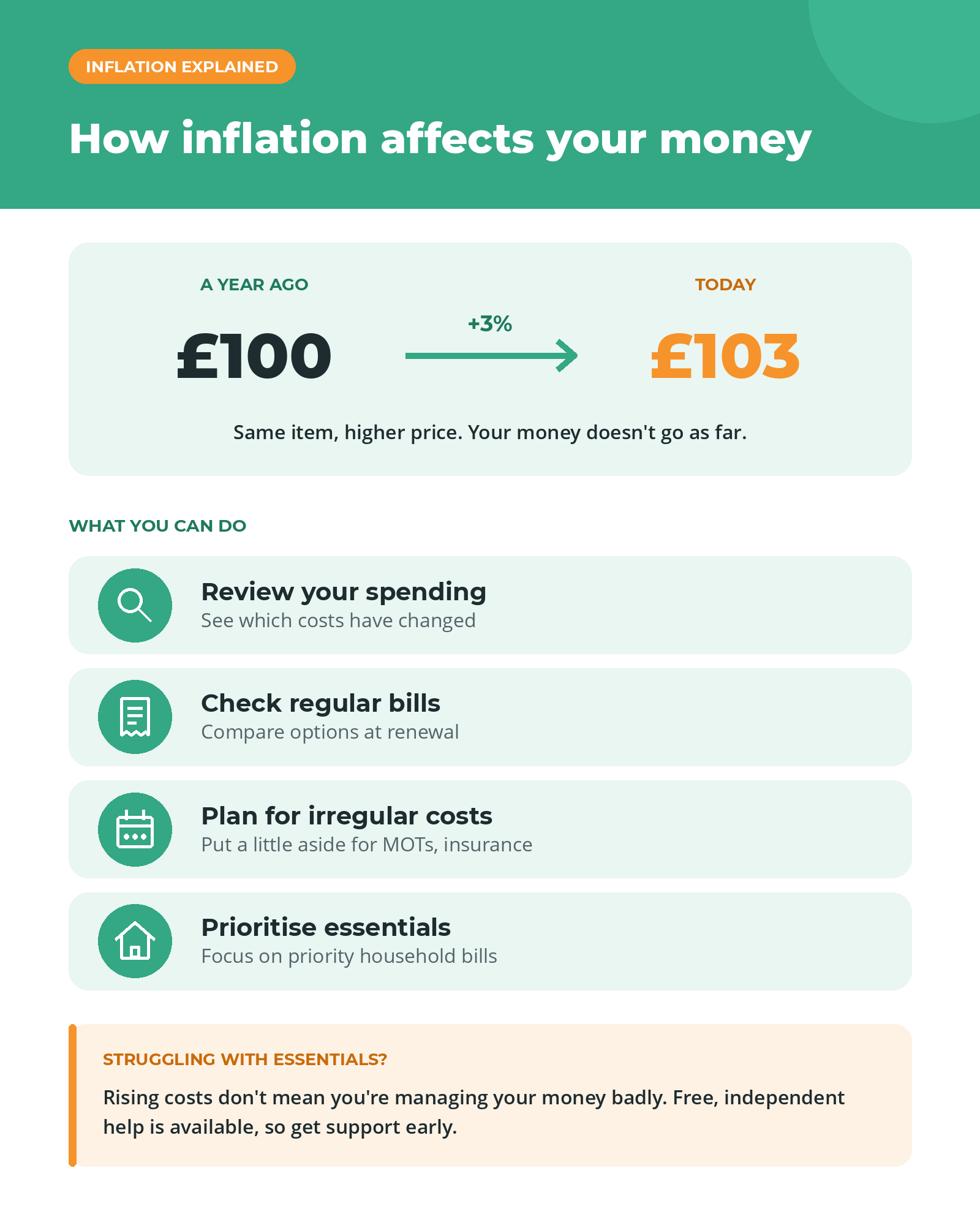
For example, if something cost £100 a year ago and its price increased by 3%, it would now cost £103. Individual prices don’t all change at the same rate. Some may rise more quickly, while others may stay the same or fall.
The Consumer Prices Index (CPI) measures inflation by following changes in the price of a typical ‘basket’ of goods and services.
If you’re interested in how prices have changed over a longer period, an inflation impact calculator can help illustrate how the purchasing power of money changes over time.
How does inflation impact household budgets?
When the cost of essentials increases faster than your income, you may have less money left once your regular expenses have been paid.
This is where inflation and the cost of living become very real. Higher daily living costs in the UK can mean spending more on the same things you were already buying. Things you often have to buy.
Energy, fuel, public transport and housing costs can put pressure on household finances. A few individual increases might not seem huge, but together they can take a bigger chunk out of your monthly income.
Why is inflation affecting food prices so much?
Food prices can be influenced by lots of costs involved in producing and selling what we eat, including ingredients, energy, transport and labour.
If some of these costs increase, they can feed through to the price rises you see on supermarket shelves.
Inflation effects on spending
One of the noticeable inflation effects on spending is that your money doesn’t go as far as it did previously.
Imagine you take home £2,000 a month and your essential expenses increase by £100 without your income changing. That’s £100 less available for everything else, whether that’s saving, socialising or dealing with an unexpected expense.
This might lead you to change what you buy, shop around more often, postpone a larger purchase or have less available to put into savings.
Managing inflation costs: What can you do?
You can’t control inflation, but you can look at how changing prices affect your finances. You could:
There may not always be easy savings to make, particularly when most of your income already goes towards essentials. Rising inflation costs don’t automatically mean you’re managing your money badly.
Are there ways to protect savings from inflation?
Inflation matters to savings because rising prices can reduce what your money can buy over time.
It can be worth checking the interest rate you’re receiving on cash savings and comparing available savings accounts. Investments are another option people may consider for longer-term money, but their value can fall as well as rise, so they may not be suitable if you’ll need quick access to your cash.
What if an unexpected expense catches you short?
Higher everyday costs can leave less room in your budget for surprises. Even with careful planning, a broken washing machine, urgent car repair or unexpected household bill can be difficult to cover.
If your savings aren’t enough, borrowing may be an option. Think about whether you need to pay the expense immediately, whether cheaper alternatives are available, how much you actually need and whether you can comfortably afford the repayments.
If you’ve considered alternatives and decide short-term borrowing is appropriate for your circumstances, QuidMarket offers quick loans for unexpected expenses, subject to eligibility and affordability checks. As a new customer, you can borrow between £300 and £1,000, with flexible repayment terms over 3 to 6 months.
Where can I find help with inflation-related financial stress?
If rising costs mean you’re regularly struggling to afford essentials such as food, energy or housing, taking on more credit could make things harder.
Free, independent organisations can provide support with debt, budgeting, benefits and household bills. Getting help early can give you more time to understand your options.
A quick recap
So, what are the effects of inflation on daily life? Ultimately, higher prices can mean your income has to stretch further to cover the same everyday needs.
Keeping an eye on changing costs and understanding your household budget can help you make informed decisions. And if you think borrowing could help in the short term, apply online with QuidMarket today.