Do you ever get to the end of the month and wonder where your money went? You’re not alone. Regular bills might be easy to remember, but food shops, subscriptions, travel and smaller day-to-day purchases can quickly add up.
Using a spending tracker can give you a clearer picture of what’s coming in, what’s going out and what’s left. And you don’t need to account for every penny. There are plenty of simple ways to track spending and understand your finances better.
What does it mean to track spending?
Tracking your spending means keeping a record of where your money goes over a certain period. It can help to group your expenses into a few categories, such as:
How do people track their spending habits?
There’s no single right way to do it. The best approach is one that works for you and is easy to maintain.
Check your banking app or statements
Regularly reviewing your transactions is one of the easiest ways to see where your money goes. Some banking apps group transactions into categories, helping you see how much you’ve spent on things such as groceries or eating out.
Use a spending tracker
A dedicated spending tracker, money management software or other personal finance tools can help organise your finances and give you an overview of different types of spending.
If you prefer to track expenses online yourself, a simple spreadsheet can work too.
Write it down
You don’t always need an app. A notebook or spending diary can be an easy way to keep track, particularly if you’d rather record purchases as you make them.
Divide your money into pots
Some people separate their money after payday, setting aside amounts for bills, groceries, savings and other spending. This can make it easier to see what’s available for the rest of the month.
How to monitor expenses without making it complicated
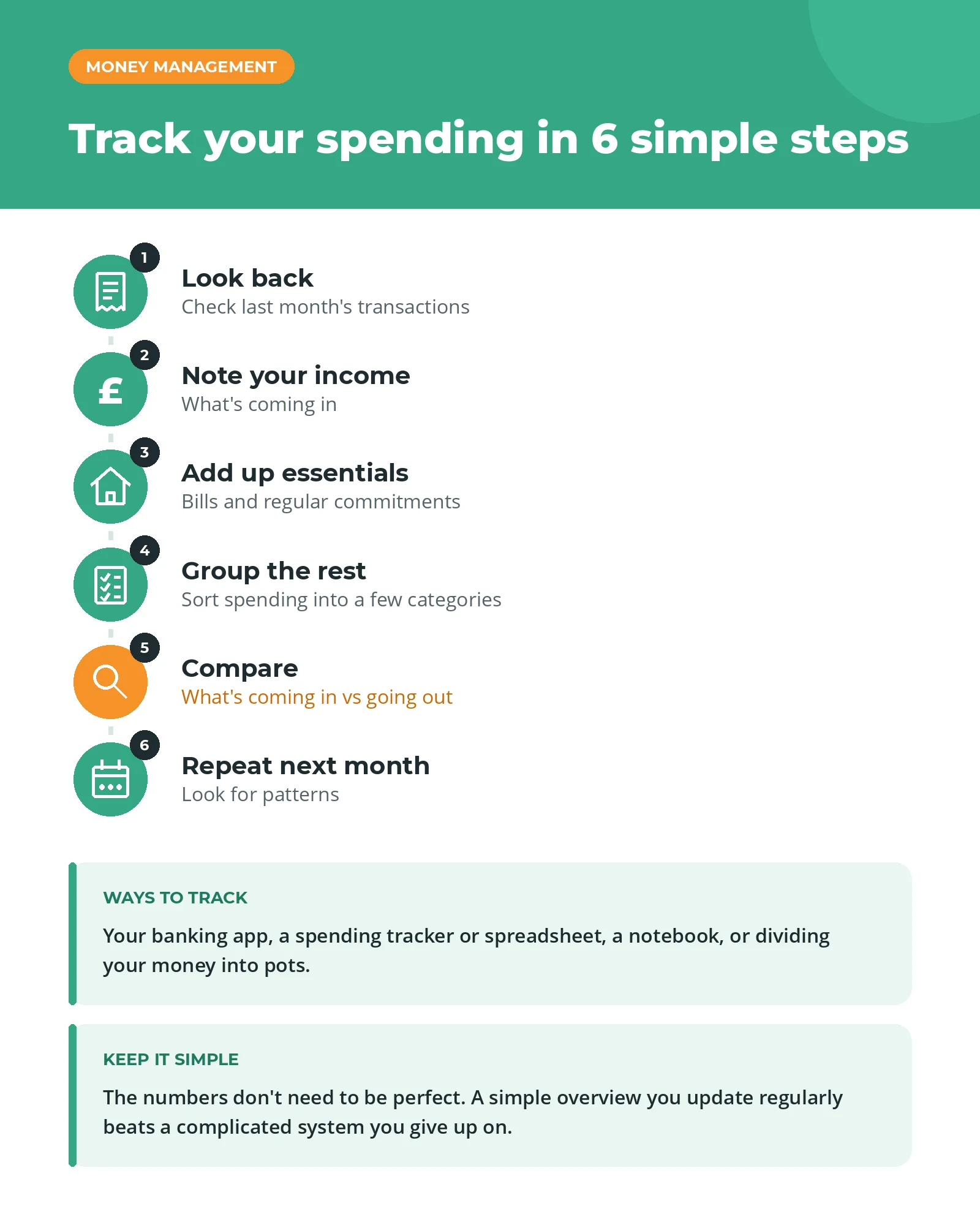
If you want to start tracking your spending, try keeping things simple:
- Look at the last month of transactions
- Note down your income
- Add up essential bills and regular commitments
- Group the rest of your spending into a few useful categories
- Compare what’s coming in with what’s going out
- Repeat next month and see whether you notice any patterns
Don’t worry if the numbers aren’t perfect. A useful overview that you regularly update can be better than a complicated system you give up on.
What are the benefits of tracking expenses?
So, why is tracking spending important? Knowing where your money goes can help you make more informed spending decisions.
You might discover a subscription you’d forgotten about, find that a particular expense is higher than you thought, or realise you need to set aside money for an upcoming annual bill.
It can also help you plan between paydays. When you know what you’ve already committed to bills and essentials, it’s easier to understand how much you have available for everything else.
What if you face an unexpected cost?
Even when you keep a close eye on your spending, some expenses are difficult to predict. Your car might need an urgent repair, or an essential appliance could break.
If your savings can’t cover the cost, borrowing might be an option. But before taking out credit, look at your income, essential expenses and existing commitments to work out whether you can afford the repayments without leaving yourself short.
If you decide short-term borrowing is for you, QuidMarket offers quick loans for unexpected expenses, subject to eligibility and affordability checks. As a new customer, you can borrow between £300 and £1,000, with flexible repayment terms over 3 to 6 months.
What if money is already tight?
Sometimes a spending tracker won’t uncover obvious places to save. If most of your income already goes on essentials, the problem isn’t necessarily how you’re managing your money.
If you’re regularly borrowing to cover existing debts, taking on more credit could make things harder. Free, independent debt advice may be a more appropriate next step.
The bottom line
Whether you use an app, spreadsheet or notebook, keeping track of your spending can help you understand where your money goes and make more informed financial decisions.
You can also learn more about how we work and whether a cash loan could help you manage unexpected expenses. Apply online today.